Political Economy
Banks as the Circulatory System of the Modern State
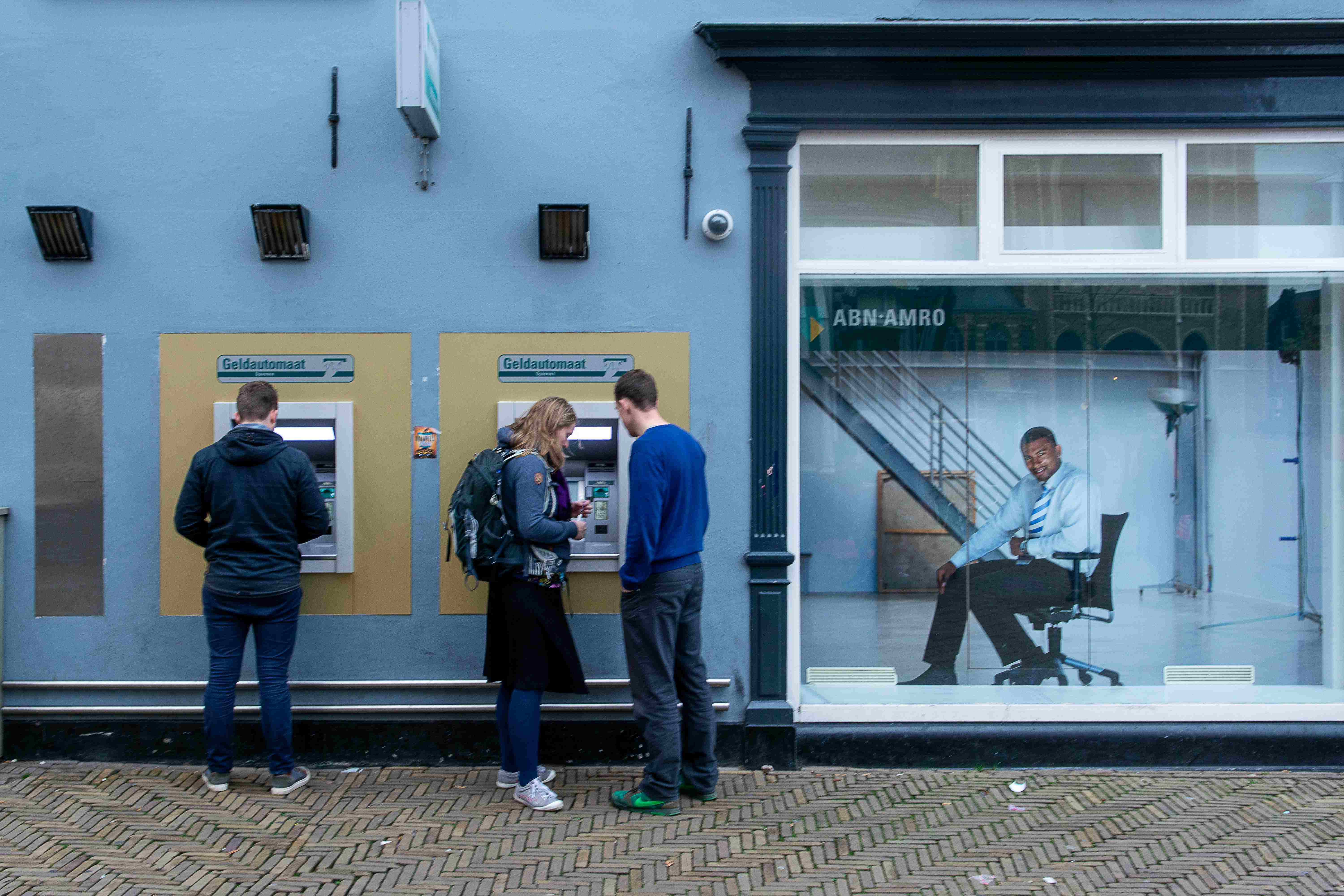
Modern states rely on more than laws, armies, and central banks. They also rely on a financial system capable of keeping money, credit, and payments in constant motion. When banking systems fail, the problem quickly stops being financial and starts becoming political.
Money Needs Infrastructure
State power is usually described through its visible instruments: laws, taxes, ministries, courts, police, armies. Those matter. But modern states also depend on a quieter capability. They need money to keep moving in a reliable way.
Wages have to arrive on time. Taxes have to be collected. Welfare payments have to reach millions of people without delay. Government debt has to be sold and rolled over. Firms need working capital. Households need somewhere to hold money that will still work tomorrow. None of this happens just because a law exists or a central bank makes an announcement. It happens because there is a financial system that can carry public authority into ordinary economic life.
That is where banks become hard to ignore. Not because they sit above the state, and not because every form of finance runs through them in the same way, but because they form much of the operating layer through which money circulates. They stand between formal authority and everyday economic activity.
The circulatory-system metaphor helps, if it is used carefully. Banks do not move value in a neutral way. They decide who gets credit, on what terms, and under what constraints. That makes them political in effect even when they are privately owned. Still, the metaphor captures something real. When circulation works, the state can reach the economy with speed and precision. When circulation freezes, a banking problem quickly becomes a problem of governability.
The layer where money actually moves
The first reason banks matter is straightforward: in most modern economies, the money people use every day is mostly bank money.
The Bank of England has said this plainly for years. Commercial banks create most of the money used in the modern economy when they make loans. In a more recent explainer, it notes that around 96% of the money held by UK households and businesses is electronic money in bank deposits rather than physical cash. Once that is true, banking stops looking like a side industry. It starts to look like part of the monetary operating system.
That has practical consequences. A state can define the unit of account, issue notes, regulate banks, and backstop the payment system. But the money most households and firms actually touch usually sits in bank accounts. Payroll, rent, supplier payments, tax payments, pensions, refunds, and transfers move through that layer.
Bank accounts are not just retail products. In practice, they are points of entry into economic life. The World Bank's Global Findex shows how widespread that has become: by 2021, 76% of adults worldwide had an account, up from 51% a decade earlier. The wider those account networks become, the more state reach depends on bank-based or bank-adjacent rails. To tax, subsidize, sanction, stabilize, or simply observe economic activity at scale, governments need those rails to keep working.
That is also why payment systems matter more than their public image suggests. The Federal Reserve describes a safe and efficient payment and settlement system as vital to the economy. That may sound like routine institutional language, but it points to something basic. A modern economy cannot be coordinated through cash, paper records, and slow manual adjustment alone. The administrative state needs payment infrastructure that is trusted, fast enough, and widely available. In practice, banks still provide a large share of that infrastructure.
Credit is where the dependence deepens
Payments would already make banks important. Credit makes them harder to replace.
The issue is not only that banks lend money. It is that they create deposit money as they lend and decide where new credit goes. A loan can become working capital for a small business, a mortgage for a household, an inventory line for a retailer, or a bridge that helps a company survive a weak quarter. The state can shape those conditions from above, but it does not usually make millions of lending decisions itself.
That is why the line between "public" and "private" gets blurry in banking. On paper, commercial banks are private firms. Operationally, they perform a function that sits close to public capacity: they help decide how much purchasing power enters the economy, where it goes, and on what terms it can be sustained.
A state could try to replace this function more directly. In theory, it could build a much larger public banking apparatus, hold accounts for everyone, underwrite households and firms itself, and allocate credit by policy. But that would require far more than money. It would require distribution, compliance, risk systems, fraud controls, servicing capacity, local knowledge, and a political willingness to own allocation decisions openly. Most states do not want to carry that full burden in normal times.
So they rely on a hybrid arrangement. The public sector sets the legal frame, supplies reserves, writes rules, insures deposits within limits, and intervenes in crises. Private banks do much of the daily screening, pricing, and distribution. The model is imperfect. It can produce fragility, favoritism, and long arguments over who gets rescued. But it remains the arrangement most advanced states live with because it is already woven into the routines of the economy.
Policy reaches the economy through banks
This becomes clearer when monetary policy enters the picture.
Public discussion often treats central banks as if they move the economy by direct command. The familiar image is simple: the central bank raises rates, lowers rates, injects liquidity, and the system responds. In reality, the path is slower and more mediated. Policy moves through bank funding costs, deposit pricing, lending rates, risk appetite, and balance-sheet strength before it reaches firms and households.
The European Central Bank says this plainly. In the euro area, monetary policy is transmitted mainly through the banking system, and policy-rate changes typically pass through to corporate lending rates over roughly six months to one year. The ECB also describes the euro area as a bank-centered economy, especially for smaller firms that do not raise money directly in capital markets.
That matters because it corrects a common simplification. Central banks are powerful, but they do not operate above the banking system. They work partly through it. If banks are healthy and willing to lend, a rate cut can spread through the economy with some force. If banks are damaged, cautious, or carrying losses, the same move may travel badly. The state still has authority. What it loses is transmission.
That is one reason banking stress worries governments so quickly. A weak banking system does not only threaten depositors or shareholders. It weakens one of the main channels through which macroeconomic policy reaches ordinary economic life.
Banks also carry the state's own liabilities
The dependency runs the other way as well. States do not rely on banks only to move private money and private credit. They also rely on them to absorb, hold, price, and distribute sovereign debt.
That can be easy to miss because government debt is often discussed in the language of budgets, bond markets, or central-bank operations. But banks remain major holders of public debt and use that debt inside their own balance sheets as collateral, liquidity buffers, and safe assets. In the United States, for example, U.S.-chartered depository institutions held about $1.7 trillion in Treasury securities in the third quarter of 2025. In Europe, banks are also among the largest domestic holders of government debt.
The relationship is therefore circular. States need trusted financial institutions to help place and circulate their liabilities. Banks, in turn, use sovereign bonds as part of their own operating architecture. Government paper supports liquidity management, regulatory treatment, and monetary operations. What looks like a buyer-seller relationship is really a deeper interdependence.
This is where the language of "private finance" starts to mislead. Banks may be private in ownership, but a large part of what they do is tied to public money, public guarantees, public debt, and public policy. Recent IMF work on bank-to-sovereign risk transmission makes the point in harder terms: when banks are weak, sovereign risk can rise, especially where public debt is already high, banks hold more sovereign debt, and bank capitalization is weaker. Stress does not stay in one compartment. It moves both ways.
What failure looks like
This is easiest to see in crisis.
Ireland after 2008 is a clear example from an advanced economy. The country did not face a banking problem that stayed inside bank balance sheets. It faced a banking collapse that moved onto the sovereign balance sheet. According to the European Stability Mechanism, more than 60 billion euros in public funds was committed to support the banking sector. The lesson was not that the state wanted to rescue banks. It was that once banks had become central enough to payments, deposits, and credit, the state had very little room to let them fail cleanly.
Lebanon shows the darker version of the same logic. There, the problem was not only bank stress. The banking sector became effectively insolvent as the broader national crisis deepened, and deposit restrictions persisted long after the initial shock. Reuters was still reporting unresolved restructuring and continuing limits in 2024. Lebanon is not a template for all countries, and it should not be treated as one. But it is a stark example of what happens when the state cannot credibly stabilize the layer where ordinary money sits. Banking failure stops looking like a sector problem and starts to look like institutional breakdown.
These cases differ in wealth, policy capacity, and political context. The shared pattern is simpler. When banking channels freeze or lose trust, the state does not stand outside the problem. It gets pulled into it.
The metaphor helps, but only up to a point
Calling banks the circulatory system of the modern state is useful, but only if the metaphor is kept on a short leash.
It works because it captures flow, blockage, dependence, and contagion. A modern state needs more than formal authority. It needs channels through which money can be stored, transferred, created, priced, and defended under stress. In most economies, banks remain central to those channels.
But the metaphor can also hide too much. Blood vessels do not decide who deserves oxygen. Banks do make choices. They ration credit, price risk unevenly, favor some sectors over others, and respond to regulation, incentives, and politics. They are not passive pipes. They are institutions with discretion and uneven effects.
The metaphor also becomes less useful if it is applied without national context. In Europe and many emerging markets, the case is especially strong because banking systems remain central to business finance. In the United States, the picture is more mixed. Capital markets, money-market funds, government-sponsored entities, and other nonbank actors play a larger role than they do in more bank-centered systems. Even there, banks still anchor deposits, payments, liquidity transformation, and a large stock of government securities.
The same caution applies to digital money and public payment innovation. Central bank digital currencies, new payment rails, and regulated stablecoins may redesign parts of the monetary stack. But official thinking still treats public money and private money mainly as complements rather than clean substitutes. Even if payments become more directly public, that does not solve the harder question of credit allocation. More public payment options would not automatically mean a world that no longer depends on banks.
What this says about state capacity
The larger point is not that banks rule the state. It is that modern states are stronger when money continues to circulate through trusted channels, even under pressure.
That helps explain why banks keep returning to the center of political life, even when politicians speak as if banking were just one industry among many. In ordinary times, banks are described as private intermediaries. In crises, they are treated more like public infrastructure. That shift is less a contradiction than a revelation. It shows what role banks were already playing underneath the language.
To say that banks are part of the circulatory system of the modern state is to make a narrower claim than it first appears. Modern sovereignty is not only a matter of legal authority. It is also a matter of operational reach. In most countries, banks still provide much of the machinery that turns that reach into something real.
This material is for informational purposes only and does not constitute individual investment advice. Prepared with AI assistance and edited by a human author.